
The Indian government has introduced a bill to overhaul the civil nuclear sector, allowing private participation and establishing a new liability regime. The SHANTI Bill, 2025, aims to repeal existing acts and address industry concerns.

India's 500 MWe Prototype Fast Breeder Reactor (PFBR) at Kalpakkam in Chennai has achieved first criticality, marking a significant advancement in the country's nuclear energy capabilities and long-term energy security.

Environmental organisation Greenpeace claimed that its recent findings -- about sources of radiation existing in the scrap market in Delhi's Mayapuri area -- has forced the Atomic Energy Regulatory Board, the Bhabha Atomic Research Centre, the National Disaster Response Force and the Narora Atomic Power Plant team to re-start their decontamination procedures in Mayapuri.Exposure to radioactive material Cobalt-60 had claimed one life and caused injuries to 11 people in April.

The operator's liability in the case of an incident is limited to 3,000 crore for reactors with thermal power above 3,600 Megawatt; 1,500 crore for reactors with thermal power between 1,500 Mw and 3,600 Mw; 750 crore for reactors with thermal power between 750 Mw and 1,500 Mw; 300 crore for reactors with thermal power between 150 Mw and 750 Mw; and 100 crore for reactors having thermal power up to 150 Mw, fuel cycle facilities other than spent fuel reprocessing plants and transportation of nuclear materials.
The UN atomic watchdog sought more information from India about mishandling of radioactive material by Delhi University on Friday, as the country's nuclear regulator conducted inspections at the varsity campus.

The rules require nuclear plant operators to maintain an insurance policy, financial security or a combination of both to cover civil liability for nuclear damage.

In many ways, this is only the beginning -- of a new chapter in India's nuclear story, and of a future where its vast thorium reserves could finally power its ambitions.
Officials of Nuclear Power Corporation of India Limited are inspecting the first unit of Koodankulam Nuclear Power Plant in Tirunelveli district after removing dummy fuel from the reactor prior to getting clearance from the Atomic Energy Regulatory board to upload the real fuel.
Whether the ambitious targets are achievable is a moot question as India's earlier target was 20,000 MW of nuclear power by 2020.
The Atomic Energy Commission and its subordinate organisations have the mandate to put in place a comprehensive plan to ensure nuclear safety in the country, but that does not seem to have been done, writes Dr A Gopalakrishnan, former chairman of the Atomic Energy Regulatory Board.
"The Department of Atomic Energy and its agencies, including the Nuclear Power Corporation of India, have been instructed to undertake an immediate technical review of all safety systems of our nuclear power plants, particularly with a view to ensuring that they would be able to withstand the impact of large natural disasters such as tsunamis and earthquakes," he had said.
Former chairman of Atomic Energy Commission Dr. P K Iyengar, former chairman of Atomic Energy Regulatory Board Dr A Gopalakrishnan and former director of Bhabha Atomic Research Center Dr.A.N. Prasad say that there is a great deal of disquiet among the scientific community at large about the deal. They also said they met the Prime Minister Manmohan Singh and discussed about the after-effects of the deal, besides writing to the MPS.

'Bharat Small Reactors are essentially similar to the existing 220 MWe Pressurised Heavy Water Reactors. The existing regulations are applicable for BSRs.'
India's first report on safety of civilian nuclear power plants was presented on Thursday at the Convention of Nuclear Safety at Vienna by Atomic Energy Regulatory Board Chairman S K Sharma. India's complete compliance with obligations under all the relevant articles of the convention in a 206-page report was presented by Sharma at the International Atomic Energy Agency, AERB Secretary Om Pal Singh told PTI in Mumbai.

Fuel loading at India's first prototype fast-breeder reactor in Kalpakkam is expected to start next week, marking a significant step in the country's nuclear program.
Amid demands for scrapping the Koodankulam nuclear power project, a top atomic scientist on Saturday vouched for its safety, saying all types of exigencies including a Fukushima-type mishap have been factored in.
India's civil nuclear liability regime has raised serious questions about the country's capacity addition programme. In an interview with Sanjay Jog, G R Srinivasan, former vice-chairman of the Atomic Energy Regulatory Board and currently principal associate-nuclear power business in GMR Energy Ltd, says the regime is tremendously unbalanced and may adversely affect the nuclear capacity addition programme.
India's strong nuclear programme, with comprehensive capability for the entire nuclear fuel cycle and the strong technical support from Bhabha Atomic Research Centre and Indira Gandhi Centre for Atomic Research, were highly appreciated, according to Chairman of Atomic Energy Regulatory Board S K Sharma, who led the 17 member high-level Indian delegation. India presented its 206-page report for the first time that included the effective regulatory mechanism for power plants.
The much-awaited Advanced Heavy Water Reactor may be the first reactor to come up in populated areas like the Bhabha Atomic Research Centre.
India's nuclear regulator on Friday said it has granted permission for loading of fuel into the much-delayed Kudankulam atomic power plant.
India's nuclear regulator has found no defects in the reactor pressure vessel of the Kudankulam atomic power plant, the Lok Sabha was informed on Wednesday.
The inputs collected from the victims by an Atomic Energy Regulatory Board scientist gave vital clues which helped to identify the source of Delhi's radioactive leak, points out Dr K S Parthasarathy, former secretary with the Board.
Former Atomic Energy Regulatory Board chairman Dr A Gopalakrishnan makes a case against the nuclear liability bill.

Appearing before a bench of justices K S Radhakrishanan and Deepak Misra, Attorney General G E Vahanvati said the Kudankulam plant is absolutely safe beyond all doubts and all the apprehensions are misplaced.
India's nuclear operator has started loading enriched uranium fuel in the first reactor of the Kudankulam Nuclear Power Project after getting the final clearance from the Atomic Energy Regulatory Board (AERB) on Tuesday.
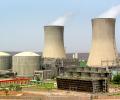
With this, the unit has exited the construction phase and began the operational phase.
The Atomic Energy Regulatory Board has withdrawn the permission given to Delhi University to use any radioactive source in its labs as it failed to submit its final reply on the radiation exposure incident at Mayapuri scrap yard in Delhi within stipulated period, the Board said.
A central team on Monday began a probe into allegations that a radioactive contaminated United States ship has been anchored at the Alang coast in Gujarat, even as non-governmental organisations demanded a probe by the Central Bureau of Investigation into the matter.The three-member team comprising an official each from the Central Pollution Control Board, the Steel Ministry and the Atomic Energy Regulatory Board will submit its report by the end of the week.
The first unit of the Koodankulam nuclear power project is expected to start generating electricity in the next 40 days, Minister of State in the Prime Minister's Office V Narayanasamy said on Monday. He said the Atomic Energy Regulatory Board officials were at the Koodankulam project site and inspecting the plant.
In a major catch for the Navi Mumbai Police, three persons have been arrested on charges of illegal possession of five kilograms of 'depleted uranium' even as Atomic Energy Regulatory Board said that the seized material did not pose any radiological hazard or security threat.
In this exclusive interview, Dr Srinivasan talks to Shobha Warrier about nuclear energy in general, the Kudankulam nuclear power plant in particular and India's energy needs.
The country's nuclear regulator virtually junked the findings of an international advocacy group on high levels of radiation in Mayapuri scrap market in New Delhi. In a statement, the Atomic Energy Regulatory Board admitted there was some contamination in local spots but it could not pose any health detriment.
Fearing presence of more radioactive sources in Delhi scrap yard Mayapuri, National Disaster Management Authority and Atomic Energy Regulatory Board (AERB) plan to carry out a multi-pronged approach survey in the area.
The police is yet to trace the origin of Cobalt-60, the radioactive material that caused serious injuries to six persons and are awaiting the recovery of the owner of the scrap shop from where it was found three days ago to get more clarity.
Investigators have revealed that an 'insider' is involved in the contamination of drinking water at the Kaiga nuclear plant in Karwar, Karnataka, and that they were questioning 10 people from the set-up in this regard.

The Indian government has come out with a nice name for its tried and tested 220MW pressurised heavy water reactor -- Bharat Small Reactor.

AAERB's permission for RAPP-7 paves the way for the subsequent phases of reactor commissioning leading to its commercial electricity generation.

T N Seshan believed that toughness at every level is needed to keep the flock under him strictly duty bound, recalls Dr K S Parthasarathy, former secretary, Atomic Energy Regulatory Board.
